






































By the end of this blog, you will get your answer to this: “If I become an FDE today, where can this career take me in the next 10 years?” Let’s say you are 3 years experienced software engineer, here you will deal with complete coding part and once your job is done, some one else will take over and work on it. Something feels off right?
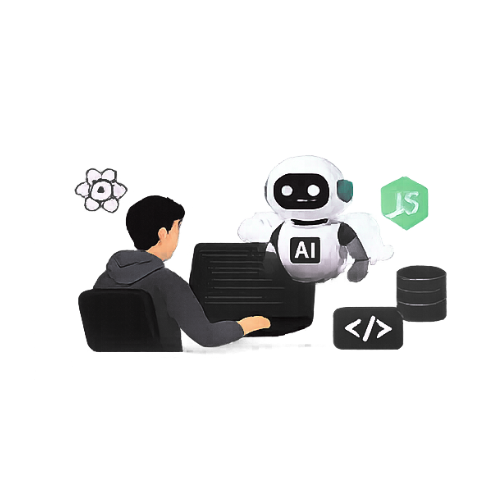
Because the most of your work happens inside your team and you rarely see how customers use the product. You won’t be involved in solving business problems. And one day, your manager asks if you would like to help a customer who is struggling to deploy your company’s AI platform. You spend a few weeks with the customer, understand their business and solve integration problems.
You build a few APIs and deploy the solution. When the customer finally says, “This saves our team hours every day,” it feels different. That is the point where many engineers realize they enjoy solving customer problems as much as writing code. That is exactly what a Forward Deployed Engineer does.
Is Forward Deployed Engineering a Good Career?
If you like to solve different problems every month, then the answer is yes. If you only enjoy writing backend code all day, this role may not be for you. An FDE sits between engineering, product, and customers. As an FDE you will write code, attend customer meetings, design solutions and troubleshoot production issues. Every project feels different. That is one of the biggest reasons people enjoy this role.
Where Does an FDE Career Start?
If you want to become an FDE, there is no one fixed path. Most of the people move into FDE from roles like:
- Software Engineer
- Full Stack Developer
- Backend Developer
- Cloud Engineer
- DevOps Engineer
- Solutions Engineer
- Technical Consultant
Strong coding skills give you a good foundation. From there, you learn how to work with customers and enterprise systems.
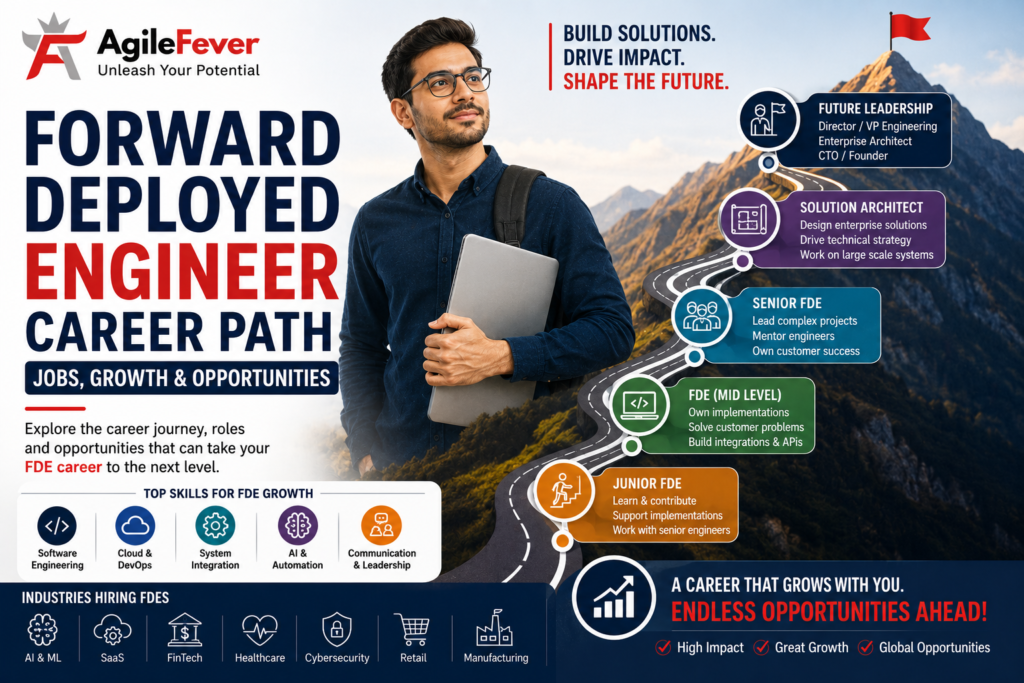
A Typical FDE Career Path Looks Like
Here is how many careers grow over time.
Level 1: Junior Forward Deployed Engineer
Here, you are learning.
- You will mostly work with senior engineers.
- Your focus is writing code, fixing issues, and understanding customer environments.
Level 2: Forward Deployed Engineer
Now you are handling customer projects on your own.
Here you will:
- Build integrations.
- Deploy solutions.
- Talk directly with customers.
- Find ways to improve the product.
Level 3: Senior Forward Deployed Engineer
At this stage, you are leading implementations.
- You will mentor junior engineers.
- Handle complex enterprise projects.
- Work with large customers.
- Help define technical strategy.
Level 4: Lead Forward Deployed Engineer
You are responsible for multiple projects.
- You will coordinate teams.
- Review solution designs.
- Help sales teams with technical discussions.
- Guide enterprise customers through large implementations.
Level 5: To different Directions
From here, your career can go in different directions.
Meanwhile check the Forward Deployed Engineer (FDE): The Complete Career Guide for 2026 | Roles, Skills, Salary, Roadmap, AI, Interview and Future.
Career Options
Career Option 1: Solution Architect
This is one of the most common paths. Instead of focusing on implementation, you will focus on designing enterprise solutions.
You will answer questions like:
- Which architecture should we use?
- Which cloud platform fits best?
- How should different systems communicate?
If this interests you, AgileFever’s GenAI & Agentic AI for Solution Architects program is a great next step.
Career Option 2: AI Engineer
Many FDEs are now moving into AI engineering. Why?
Because enterprise customers increasingly ask for:
- AI assistants
- AI agents
- Document search
- Workflow automation
- Enterprise chatbots
If you already understand customer problems, adding AI skills becomes a natural progression.
Recommended Learning Path: Gen AI and Agentic AI Bootcamp
Career Option 3: Customer Engineering
Some companies call this role:
- Customer Engineer
- Field Engineer
- Solutions Engineer
- Technical Account Engineer
The names are different but the work is similar. You will help customers adopt technology successfully.
Career Option 4: Product Management
After working with dozens of customers, you will start noticing patterns. Everyone asks for similar features. Then you will understand what customers actually need. That experience makes many FDEs strong Product Managers.
Career Option 5: Engineering Leadership
Some engineers continue growing into:
- Engineering Manager
- Director of Engineering
- VP Engineering
Their customer-facing experience helps them build products that solve real problems.
Check the salaries of FDE in India, USA and globally.
Why AI Is Creating More Opportunities
Five years ago, many FDE projects focused on cloud software and APIs.
Today, customers ask different questions.
- “Can we build an AI assistant?”
- “Can we automate this workflow?”
- “Can AI search our company documents?”
- “Can AI connect with our CRM?”
That is why AI knowledge is becoming one of the biggest career advantages for FDEs. Companies do not just need someone who understands AI. They need someone who can deploy AI in real business environments.
Industries Hiring Forward Deployed Engineers
You will find FDE roles across many industries.
- Artificial Intelligence
- SaaS
- FinTech
- Healthcare
- Cybersecurity
- Manufacturing
- Retail
- Logistics
- Government Technology
As enterprise AI grows, more industries are creating customer-facing engineering roles.
Skills That Help You Grow Faster
If your goal is to move into senior roles, spend time improving these areas.
Technical
- System Design
- Cloud Platforms
- APIs
- Enterprise Integrations
- AI Agents
- RAG
Business
- Requirement Gathering
- Customer Communication
- Stakeholder Management
- Solution Design
Leadership
- Mentoring
- Project Ownership
- Decision Making
- Presentation Skills
Common Mistakes That Slow Career Growth
- Only focusing on coding: Writing good code is important but understanding customer problems is equally important.
- Ignoring communication: Many promotions happen because people trust you to work directly with customers.
- Avoiding AI: You don’t have to become an AI researcher. But understanding AI is quickly becoming part of modern enterprise engineering.
- Staying inside your comfort zone: Volunteer for customer calls, Help with deployments, Learn how products are used outside the engineering team. This is where real growth happens.
Frequently Asked Questions
How long does it take to become an FDE?
Many engineers transition within 2 to 5 years of software development experience, though some start earlier.
Can an FDE become a Solution Architect?
Yes. It is one of the most common career progressions.
Is AI replacing FDEs?
No. AI is changing the work, not replacing the role. Customers still need engineers who can understand their business and deploy solutions successfully.
Is this a long-term career?
Yes. As enterprise software and AI become more complex, companies continue to need engineers who can bridge technology and customer success.
What’s Next?
A Forward Deployed Engineer is not the final destination. It is a career that opens many doors. You can move into AI Engineering, Solution Architecture, Product Management, Customer Engineering Or technical leadership.
The more customer problems you solve and the more modern technologies you learn, the more valuable you become.
Recommended Learning Paths
If you are planning your next career move, these AgileFever programs align well with where the FDE role is heading:
- Gen AI and Agentic AI Bootcamp – Build AI agents, RAG systems, and enterprise AI solutions.
- GenAI & Agentic AI for Solution Architects – Learn enterprise solution design for AI systems.
- Enterprise AI Agents on Azure – Gain hands-on experience deploying AI applications in enterprise environments.