













































Upgrading today
Checked 29 October 2026. This guide was written in 2023 for the move from SAFe 5.1 to SAFe 6.0. That is no longer the upgrade most people need. Scaled Agile has dropped version numbers from its courses and certifications, and its support article “SAFe course upgrades” (dated 9 September 2026) describes one upgrade path today.
- AI-Native SAFe is the only upgrade path. The AI-Empowered SAFe upgrade path is no longer available.
- Eligibility: you need an active SAFe certification and access to SAFe Studio.
- Certifications covered: SAFe Agilist (SA), SAFe Scrum Master (SSM), SAFe Product Owner/Product Manager (POPM), SAFe for Government (SA-GOV), SAFe DevOps (SDP), Agile Product Management (APM), Lean Portfolio Management (LPM), Release Train Engineer (RTE), SAFe Advanced Scrum Master (SASM), SAFe Architect (ARCH), SAFe Agile Software Engineer (ASE), SAFe Practice Consultant (SPC) and Advanced SAFe Practice Consultant (ASPC).
- Steps, cost and deadline: Scaled Agile does not state these on the page we checked. It points to its AI-Native SAFe Upgrade FAQ. Read that FAQ, and the upgrade page in SAFe Studio or the Scaled Agile community (both need a login), before you plan or budget.
What AI-Native SAFe adds. Scaled Agile introduced AI-Native SAFe in June 2026 as an operating model built on Core SAFe. Its materials cover AI-Native Agile Release Trains and teams, an emerging AI Value Architect role, and changes to ART events including PI Planning. The framework site now shows AI-Native items in the Big Picture, such as AI-Native Teams, an AI Innovation Pipeline, AI Governance and Ethics, “Intent, Specifications, and Context”, and “Curated Data”, plus a Leadership and Culture competency called Building an AI Organization. Scaled Agile’s related courses include AI-Native Foundations, AI-Native Value Architect, Leading the AI-Native Organization and Launching AI-Native ARTs. AgileFever does not yet teach these courses.
The framework itself is now organised into five Disciplines (Lean Portfolio Management, Team and Technical Agility, Product Development Flow, Large Solution Integration and Delivery, and Leadership and Culture), which replace the seven core competencies of the 2023 Big Picture. Scaled Agile also writes Planning Interval (PI) instead of Program Increment.
To refresh your SAFe knowledge, see AgileFever’s Leading SAFe course. If you have questions about your own upgrade, contact us and we will help you read the requirements.
The rest of this guide covers the 2023 SAFe 6.0 release and the move from SAFe 5.1. It is kept as history and as a reference for organisations still on that material; for certification upgrades, use the section above.

Key Highlights
- SAFe 6.0 offers significant changes and improvements to the framework
- The new version focuses on enabling business agility in the digital age
- It features the Business Agility Value Stream in the 2023 Big Picture
- SAFe 6.0 emphasizes the importance of the flow of value and provides specific accelerators for accelerating value delivery
- The upgrade process to SAFe 6.0 involves assessing current maturity, building a transition team, and following a step-by-step guide
- The release uses the role name Scrum Master/Team Coach and keeps a focus on streamlined value flow
Introduction
The Scaled Agile Framework (SAFe) has become the go-to framework for many global organizations and government agencies looking to scale Agile practices and achieve business agility. SAFe 6.0, released in 2023, brought changes that organizations moving from SAFe 5.1 needed to plan for.
SAFe 6.0 is designed to address the new realities of the marketplace, as seen in 2023. It describes Lean-Agile practices that enable enterprises to navigate today’s challenges and opportunities. The framework focuses on helping organizations work differently and build the future by aligning strategy to execution and delivering value continuously.
In this step-by-step guide, we will explore the key highlights of SAFe 6.0 and provide insights into understanding the essentials of the new version. We will also discuss how organizations can prepare for the upgrade process and implement the new roles, responsibilities, and processes introduced in SAFe 6.0. Additionally, we will look at streamlining processes for accelerated value flow.
By the end of this guide, you will have a comprehensive understanding of SAFe 6.0 and the steps involved in upgrading to the new version. You will also be equipped with practical tips for implementing the changes and improving the flow of value.
Understanding the Essentials of SAFe 6.0
SAFe 6.0 introduces several essential changes and updates that organizations need to understand to effectively implement the new version. The core values and principles of SAFe have been redefined to align with the new realities of the marketplace and support the development of business agility.
The new framework emphasizes the importance of working differently and building the future by enabling the entire organization to adopt a Lean-Agile mindset and practices. From marketing and finance to security and HR, everyone needs to work with the same mindset and practices to align strategy to execution and meet customer expectations.
SAFe 6.0 is designed to support scaled agile practices and provides a comprehensive approach to enable organizations to scale Agile practices effectively. It offers guidance on how to organize around value streams and leverage the power of Agile Teams to deliver measurable business outcomes. With SAFe 6.0, organizations can navigate the challenges of the digital age and thrive as modern, digital businesses.
The Core Values and Principles Redefined
In SAFe 6.0, the core values and principles have been redefined to better align with the new realities of the marketplace and support the development of business agility. The core values of SAFe, which were previously alignment, transparency, built-in quality, and program execution, have been updated to alignment, transparency, respect for people, and relentless improvement.
Respect for people and relentless improvement are the two values that SAFe 6.0 added to alignment and transparency.
The 2023 release also retired the House of Lean and moved its tenets into other parts of the framework. According to Scaled Agile’s “What’s new in SAFe 6.0” article, respect for people and relentless improvement became core values, flow moved into principle #6 where it anchors value stream management, and innovation became part of the Continuous Learning Culture competency. Built-in Quality stopped being a core value and became a dimension of the Team and Technical Agility competency. The Lean-Agile Mindset is now described through the five principles of Lean thinking and the Agile Manifesto.
SAFe principle #6 is Make Value Flow without Interruptions. Scaled Agile’s page for it refers to eight flow accelerators and links to articles on value stream management and on team, ART, solution train and portfolio flow.
By redefining the core values and principles, SAFe 6.0 ensures that organizations have a solid foundation to navigate the challenges of the digital age and achieve business agility at scale.
Overview of the New Big Picture in SAFe 6.0
The Big Picture in SAFe 6.0 has undergone significant changes to reflect the new features and updates introduced in the framework. The Big Picture provides an overview of the entire SAFe framework and its various elements, enabling organizations to visualize how different components fit together to achieve business agility.
In SAFe 6.0, the Big Picture highlights the importance of value streams and their role in delivering value to customers. The 2023 Big Picture included the Business Agility Value Stream (BAVS), which maps the actions and SAFe practices needed to turn an opportunity into customer value.
The Big Picture also emphasizes the flow of value and provides specific accelerators for accelerating value delivery. It showcases the various levels of the SAFe framework, including the Agile Release Trains (ARTs), Solution Trains, and Portfolio, and illustrates how they collaborate to deliver value to customers.
By understanding the new Big Picture in SAFe 6.0, organizations can gain a holistic view of the framework and its components, enabling them to effectively implement the new version and achieve business agility.
The Six Themes of the 2023 Release
Scaled Agile framed SAFe 6.0 under the tagline “Work Differently. Build the Future.” and grouped the changes into six themes:
- Strengthening the foundation for business agility: the Business Agility Value Stream at the top of the Big Picture, the revised values and principles, and a refreshed Implementation Roadmap.
- Empowering teams and clarifying responsibilities: updated role articles, including the Scrum Master/Team Coach.
- Accelerating value flow: eight properties of flow, eight flow accelerators, and new flow articles for the team, ART, solution train and portfolio.
- Enhancing business agility across the business: patterns that take SAFe beyond IT.
- Building the future with AI, big data and cloud.
- Delivering better outcomes with Measure and Grow and OKRs.
The sections below follow these themes. Where Scaled Agile has since reorganised the framework, the note at the top of this post says so.
Preparing Your Organization for SAFe 6.0
Before embarking on the upgrade process to SAFe 6.0, organizations need to ensure they are adequately prepared. This involves assessing the organization’s readiness, building a transition team, and fostering a continuous learning culture.
Assessing the organization’s readiness involves evaluating the current maturity level and understanding the organization’s goals and objectives. This assessment helps identify any gaps or areas that need improvement to successfully implement SAFe 6.0.
Building a transition team is crucial to drive the upgrade process and ensure a smooth transition to the new version. The transition team should consist of individuals who have a deep understanding of the organization’s processes and can effectively guide the organization through the upgrade process.
Fostering a continuous learning culture is essential to enable organizations to adapt to the changes introduced in SAFe 6.0. This involves promoting a culture of continuous improvement, encouraging open communication, and providing opportunities for ongoing learning and development.
By preparing the organization for SAFe 6.0, organizations can set themselves up for a successful upgrade process and maximize the benefits of the new version.
Assessing Current Maturity and Readiness
Assessing the current maturity and readiness of the organization is a crucial step before upgrading to SAFe 6.0. This assessment helps organizations identify their current strengths, weaknesses, and areas for improvement, ensuring a smooth transition to the new version.
Maturity levels in SAFe refer to the organization’s ability to effectively implement and sustain Agile practices. Assessing the maturity levels involves evaluating various aspects, such as Agile practices, leadership support, organizational culture, and the level of collaboration across teams.
The SAFe Implementation Roadmap provides a structured approach to guide organizations through the implementation of SAFe. Assessing the organization’s readiness involves reviewing the roadmap and identifying any gaps or areas that need to be addressed before upgrading to SAFe 6.0.
It is also important to align the upgrade process with the organization’s goals and objectives. This ensures that the upgrade to SAFe 6.0 is aligned with the organization’s strategic direction and supports the achievement of the desired outcomes.
By assessing the current maturity and readiness of the organization, organizations can identify the necessary steps and improvements required to successfully upgrade to SAFe 6.0.
What Changed in the Implementation Roadmap
The roadmap was one of the most edited parts of the 2023 release. Scaled Agile’s release article lists these changes:
- The Waterfall/Ad Hoc Agile starting point was removed.
- The SAFe Executive Workshop toolkit was added to the “Go SAFe” step, and “Leading in the Digital Age” was added as a leadership program.
- The responsibilities of the Lean-Agile Center of Excellence (LACE) were clarified.
- “Organize Around Value” replaced “Identify ARTs and Value Streams”, and a workshop toolkit was added for it.
- “Enhance the Portfolio” replaced “Extend to the Portfolio”, and Lean Portfolio Management practices are explored earlier.
- “Accelerate” stresses that the journey never ends and that the aim is a culture of innovation.
- SAFe Program Consultants were renamed SAFe Practice Consultants (SPCs). They coach the roadmap practices and act as change agents over time.
Scaled Agile has updated the roadmap since, most recently in February 2026 for the AI-Empowered course material, and it now has 13 steps. If you plan against it, use the current version on the framework site.
Building a Transition Team
Building a transition team is crucial to ensure a smooth and successful upgrade to SAFe 6.0. The transition team consists of individuals who have a deep understanding of the organization’s processes and can effectively guide the organization through the upgrade process.
Here are some key considerations and responsibilities when building a transition team for SAFe 6.0:
- Identify individuals with knowledge and experience in Agile and SAFe practices
- Ensure representation from different departments and levels of the organization
- Define clear roles and responsibilities for each team member
- Foster strong communication and collaboration within the transition team
- Align the transition team’s goals with the organization’s strategic objectives
- Provide training and resources to support the transition team in guiding the organization through the upgrade process
By building a strong and capable transition team, organizations can ensure a smooth and successful transition to SAFe 6.0. The transition team plays a crucial role in driving the upgrade process, aligning the organization’s goals with the new version, and fostering a culture of continuous improvement and learning.
The Upgrade Process Explained
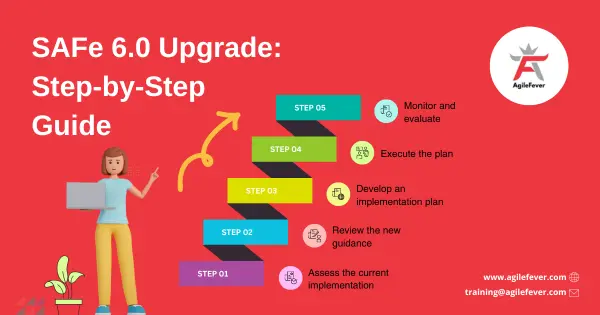
The upgrade process to SAFe 6.0 follows a step-by-step guide that helps organizations smoothly transition from the previous version to the latest one. This process ensures that the upgrade is done correctly and that the organization can maximize the benefits of SAFe 6.0. The upgrade process includes the following steps:
- Assess the current implementation of SAFe and identify areas that need improvement or modification.
- Review the new guidance and specific accelerators provided in SAFe 6.0 to understand the changes and updates.
- Develop a plan for implementing SAFe 6.0, including training, communication, and change management strategies.
- Execute the plan by implementing the new practices, roles, and responsibilities introduced in SAFe 6.0.
- Continuously monitor and evaluate the implementation to identify any issues or areas for improvement.
Step-by-Step Guide to Upgrading to SAFe 6.0
To upgrade to SAFe 6.0, organizations can follow a step-by-step guide that provides a roadmap for a successful transition. Here is a breakdown of the steps involved in upgrading to SAFe 6.0:
- Assess the current implementation: Evaluate the current implementation of SAFe and identify any areas that need improvement or modification.
- Review the new guidance: Familiarize yourself with the new guidance provided in SAFe 6.0. This includes understanding the specific accelerators and updates introduced in the latest version.
- Develop an implementation plan: Create a detailed plan that outlines the steps, timelines, and resources needed to implement SAFe 6.0. Consider factors such as training, communication, and change management strategies.
- Execute the plan: Implement the new practices, roles, and responsibilities introduced in SAFe 6.0. Provide necessary training and support to ensure a smooth transition.
- Monitor and evaluate: Continuously monitor the implementation and evaluate its effectiveness. Make adjustments as necessary to ensure a successful upgrade.
By following this step-by-step guide, organizations can ensure a seamless transition to SAFe 6.0 and leverage its new features and benefits.
How the SAFe 5 to 6.0 Transition Worked for Certifications
This is the history behind the “upgrade” in this post’s title. Scaled Agile’s SAFe 6.0 FAQ described it like this:
- New certifications meant taking a SAFe 6.0 course.
- People with existing SAFe 5 certifications completed the SAFe 6.0 Upgrade, which included new content and videos.
- Most SAFe 5 certifications needed no exam to upgrade. Upgrading an SPC 5 required a 20-question SAFe 6.0 Upgrade Quiz with a 45-minute limit.
- Expired SAFe 5 certifications had to be renewed first, then upgraded.
- Previously earned certifications stayed valid, and completing the upgrade earned a new SAFe 6.0 digital badge for each certification held (not for ASE and Gov, which were not available then).
None of this describes today’s upgrade. Version numbers are gone from certifications, and the one path now is the AI-Native SAFe upgrade in the “Upgrading today” section above.
Key Changes and Their Impact on Your Agile Teams
SAFe 6.0 introduces major changes that have a significant impact on agile teams at the team level. These changes are designed to enhance collaboration, improve efficiency, and drive better outcomes. Here are some key changes and their impact on agile teams:
- Role name: SAFe 6.0 uses the role name Scrum Master/Team Coach, a coach who serves the team by guiding its meetings and workflows.
- Team and ART support: the Scrum Master/Team Coach helps both the team and the Agile Release Train deliver results.
- Adjusted responsibilities: The new roles and responsibilities in SAFe 6.0 require team members to adapt and adjust their job performance to align with the changes. This may involve acquiring new skills or adopting new practices.
- Improved collaboration: SAFe 6.0 emphasizes the importance of collaboration within agile teams. It encourages teams to work together to achieve common goals and deliver value effectively.
These changes in SAFe 6.0 aim to enhance the performance and effectiveness of agile teams, enabling them to deliver value more efficiently and collaboratively.
Implementing New Roles and Responsibilities
Implementing the new roles and responsibilities introduced in SAFe 6.0 is a crucial aspect of the upgrade process. These roles play a significant role in driving agile practices and optimizing flow within the organization. Here are the key points to consider when implementing the new roles:
- Communicate the changes to all team members and provide clarity on their new roles and responsibilities.
- Ensure that team members understand what the Scrum Master/Team Coach role covers and how it contributes to the success of the team.
- Provide training and support to team members to help them adapt to their new roles effectively.
- Foster a culture of collaboration and continuous improvement, where the new roles can thrive and make a positive impact.
- Regularly evaluate and assess the performance of the new roles to identify areas for improvement and support their growth and development.
By effectively implementing the new roles and responsibilities, organizations can enhance the performance and effectiveness of their agile teams and drive better outcomes.
From Scrum Master to Team Coach: What’s New?
SAFe 6.0 uses the role name Scrum Master/Team Coach (SM/TC). Scaled Agile describes it as a coach who serves the team by guiding its meetings and workflows, and who helps both the team and the Agile Release Train deliver results. If you want to build the coaching side of this role, see our SAFe Scrum Master course.
Role Articles and Terminology in the 2023 Release
The release rewrote the role articles for the Agile Release Train, Agile Teams, Business Owners, Enterprise Architect, Epic Owners, the LACE, Product Owner, Product Management, Release Train Engineer, SAFe Practice Consultant, Scrum Master/Team Coach, Solution Management, Solution Train Engineer and System Architect. The aim was to state responsibilities more clearly, and four roles with content authority gained documented partnerships that product development flow depends on. A “responsibility wheel” summarises what an ART owes its customers.
It also changed a lot of vocabulary. These are the renames Scaled Agile lists:
| Before (SAFe 5.1) | 2023 release (SAFe 6.0) |
|---|---|
| Program (as in Program Backlog) | ART (ART Backlog, ART Planning Board, ART PI Objectives) |
| Program Increment | Planning Interval |
| Daily Standup | Team Sync |
| Scrum of Scrums | Coach Sync |
| ScrumXP | SAFe Scrum |
| Kanban (team level) | SAFe Team Kanban |
| Agile Program Management Office (APMO) | Value Management Office (VMO) |
| Metrics | Measure and Grow |
| Lean Systems and Solution Engineering | Lean Systems Engineering |
| Pre-PI Planning and Post-PI Planning (solution level) | Pre-Plan, and Coordinate and Deliver |
| SAFe Program Consultant | SAFe Practice Consultant |
Adjusting to New Role Names and Responsibilities
Adjusting to the new role names and responsibilities introduced in SAFe 6.0 requires team members to adapt and align their job performance accordingly. Here are some key points to consider when adjusting to the new role names and responsibilities:
- Communicate the changes: Communicate the new role names and responsibilities to all team members, ensuring they understand the reasons behind the changes and the expected outcomes.
- Provide support and training: Offer training and support to team members to help them understand their new roles and develop the necessary skills to fulfil their responsibilities effectively.
- Foster collaboration and teamwork: Encourage team members to work together, leveraging their expertise and skills to achieve common goals and deliver value.
- Continuous improvement: Emphasize the importance of continuous improvement and learning, ensuring team members are open to feedback and are willing to adapt their job performance as needed.
By adjusting to the new role names and responsibilities, team members can contribute to the success of the organization’s agile practices and drive better outcomes.
Extending SAFe Beyond IT
One theme of the release was applying SAFe to the wider business. Scaled Agile described five patterns, and added a home page with experience articles for Finance, Marketing, HR, Legal, Operations and other functions:
- Business-Enabled ART: an ART that includes business people alongside technical people.
- Agile Business Train: one or more operational value streams plus the ARTs needed to deliver a full business solution.
- Agile Executive Team: aligns senior leaders so they run the company as one team.
- Agile Business Function: applies Lean-Agile methods to non-IT functions.
- Combined Portfolio: contains both development and operational value streams.
Building the Future with AI, Big Data and Cloud
The 2023 release gave each of three technology drivers its own guidance:
- AI: added to the spanning palette as something that can transform both solutions and business models.
- Big data: handled at the portfolio level, because the value comes from aggregating data across ARTs. The guidance calls for shared DataOps practices across development value streams.
- Cloud: described as the most disruptive driver of change in how enterprise IT delivers, with faster product development as the main reason enterprises move to it.
This was the early version of what Scaled Agile now calls AI-Empowered and AI-Native SAFe. The current picture is in the “Upgrading today” section above.
Streamlining Processes for Accelerated Value Flow
SAFe 6.0 focuses on streamlining processes to ensure an accelerated flow of value within organizations. Here are some key points to consider when streamlining processes for accelerated value flow:
- Flow of value: SAFe 6.0 emphasizes the importance of enabling a smooth flow of value across the organization. This can be achieved by eliminating interruptions and bottlenecks in the value stream.
- Value stream management: Value stream management plays a crucial role in ensuring a streamlined and efficient flow of value. SAFe 6.0 guides value stream management practices to optimize value delivery.
- Kanban system: SAFe uses a Kanban system to visualize workflow, establish work in process limits, measure throughput, and improve the process. The Kanban system helps teams to manage and optimize their work.
By streamlining processes and implementing a Kanban system, organizations can accelerate the flow of value and deliver value to customers more quickly and efficiently.
Other Flow Content in the 2023 Release
- Flow articles: four new articles apply the flow accelerators at the team, ART, solution train and portfolio levels.
- SAFe Team Kanban and SAFe Scrum: Team Kanban was revised for teams that work inside an ART. SAFe Scrum replaced ScrumXP, and the XP-inspired practices moved into Built-in Quality and other articles.
- Kanban for every backlog: each backlog is visualised in a Kanban system, and the Backlog state was renamed Ready.
- Built-in Quality: the model starts with practices for any kind of work (shift learning left, pairing and peer review, collective ownership, T-shaped skills, artifact standards and a definition of done, workflow automation) and then adds practices for business functions, software, IT systems, hardware and cyber-physical systems.
- Value stream management: moved from extended guidance onto the Big Picture as a portfolio responsibility, with new guidance on the triads that manage value streams.
- Value Management Office: the renamed APMO focuses on understanding, measuring and improving value flow. Its responsibilities include defining portfolio scope, facilitating strategy and Portfolio Sync, working with the LACE to spread successful ART patterns, and supporting lean budgeting and governance.
Understanding the 8 Properties of Accelerating Value Flow
Scaled Agile’s page for principle #6 (Make Value Flow without Interruptions) refers to eight flow accelerators. Read that page for the official list.
Practical Tips for Implementing the New Flow Processes
Implementing the new flow processes introduced in SAFe 6.0 requires careful planning and execution. Here are some practical tips for implementing the new flow processes:
- Familiarize yourself with the new flow articles provided in SAFe 6.0. These articles provide guidance and best practices for implementing the new flow processes.
- Train and educate team members on the new flow processes and their role in optimizing value flow within the organization.
- Establish clear communication channels to ensure that all team members are informed and aligned with the new flow processes.
- Continuously monitor and evaluate the implementation of the new flow processes, making necessary adjustments and improvements along the way.
- Foster a culture of continuous improvement, encouraging teams to explore and experiment with new ideas and approaches to optimize value flow.
By following these practical tips, organizations can effectively implement the new flow processes introduced in SAFe 6.0 and optimize the flow of value throughout their value streams.
Measuring Success and Continuous Improvement
Measuring success and continuous improvement are essential aspects of SAFe 6.0. Here are some key points to consider when measuring success and driving continuous improvement:
- Define clear success metrics and key performance indicators (KPIs) that align with the organization’s strategic objectives and business goals.
- Implement OKRs (Objectives and Key Results) to track progress and measure the achievement of strategic outcomes.
- Regularly review and assess the performance of teams and value streams to identify areas for improvement and drive continuous improvement.
- Foster a culture of learning and experimentation, encouraging teams to constantly seek ways to improve their processes and practices.
- Use feedback and data-driven insights to identify bottlenecks, inefficiencies, and areas of improvement, and take action to address them.
By measuring success and continuously improving, organizations can drive better outcomes, enhance their performance, and achieve their strategic objectives.
Introducing OKRs
OKRs (Objectives and Key Results) help organizations measure success and drive continuous improvement. Here’s an overview:
- OKRs: OKRs provide a framework for setting clear objectives and measurable key results that align with the organization’s strategic themes and business outcomes. They help teams track progress and focus on achieving specific outcomes.
By adopting OKRs, organizations can effectively measure success, track progress, and drive continuous improvement in their agile practices.
OKR Use Cases and Measure and Grow
Scaled Agile describes OKRs as optional in SAFe, with three use cases: tracking the portfolio’s Strategic Themes to improve alignment, defining business outcomes for epics and Lean business cases, and setting improvement goals for a SAFe transformation.
Measure and Grow, the renamed Metrics content, looks at three domains at every level from portfolio to team:
- Outcomes: whether customer and business needs are being met, using KPIs, OKRs, employee engagement measures, iteration goals and PI objectives.
- Flow: six flow metrics (flow distribution, velocity, time, load, efficiency and predictability), with DORA metrics as a supplementary DevOps view.
- Competency: assessments of proficiency in the framework’s competencies, which show where to focus next.
The guidance warns against letting a measure become the goal: combine metrics with direct observation, and track only what supports a decision.
Tracking Progress and Identifying Improvement Areas
Tracking progress and identifying improvement areas is crucial for organizations to drive continuous improvement and achieve their business outcomes. Here are some key points to consider when tracking progress and identifying improvement areas:
- Establish clear success metrics and key performance indicators (KPIs) that align with the organization’s strategic objectives and business outcomes.
- Regularly review and assess the performance of teams, value streams, and the overall agile transformation to track progress and identify areas for improvement.
- Use data-driven insights and feedback to identify bottlenecks, inefficiencies, and areas of improvement.
- Foster a culture of continuous learning and improvement, encouraging teams to seek opportunities to enhance their processes and practices.
- Take action on the identified improvement areas, implementing changes and adjustments to drive continuous improvement and achieve better outcomes.
By tracking progress and identifying improvement areas, organizations can continuously improve their agile practices and drive better business outcomes.
Conclusion
As you embark on the SAFe 6.0 upgrade journey, understanding the core values, principles, and essential changes is key to a successful transition. Assess your organization’s readiness, build a capable transition team, and follow a structured step-by-step guide for upgrading. Embrace the new roles and responsibilities and streamline processes for accelerated value flow. Measure success through OKRs, continuously improve, and adapt to the evolving Agile landscape. By implementing these strategies, you can navigate the complexities of SAFe 6.0 with confidence and drive sustainable business agility.
Frequently Asked Questions
How Does SAFe 6.0 Differ from Previous Versions?
SAFe 6.0 brings significant changes and updates compared to previous versions. It aims to address the new realities of the marketplace and the challenges faced by organizations in the digital age. The new version introduces major changes in roles, processes, and the overall framework to enhance business agility and adapt to the changing market dynamics.
What Are the Benefits of Upgrading to SAFe 6.0?
Upgrading to SAFe 6.0 brings several benefits to organizations. It enhances business agility, enables organizations to adapt to the demands of the digital age, ensures strategic alignment, and helps organizations navigate market changes effectively. The new version introduces updates and improvements that drive better outcomes and enable organizations to thrive in the modern, digital business landscape.
How Can Organizations Prepare for the Transition to SAFe 6.0?
Organizations can prepare for the transition to SAFe 6.0 by ensuring readiness across the entire organization. This includes familiarizing themselves with the new version, leveraging the resources available on the SAFe community portal, and considering safe certification to ensure a smooth and successful transition.
How do I upgrade my SAFe certification now?
As of 29 October 2026, Scaled Agile offers one upgrade path, AI-Native SAFe. The AI-Empowered SAFe upgrade path is no longer available. You need an active SAFe certification and SAFe Studio access. Covered certifications include SAFe Agilist, SAFe Scrum Master, SAFe Product Owner/Product Manager, SAFe DevOps, Lean Portfolio Management, Release Train Engineer, SAFe Advanced Scrum Master, SAFe Architect, SAFe Agile Software Engineer, SAFe Practice Consultant and Advanced SAFe Practice Consultant, among others listed in the section above. Scaled Agile does not publish the steps, cost or deadline on its support article; it points to the AI-Native SAFe Upgrade FAQ, so read that and your SAFe Studio upgrade page. For help with upgrade questions, contact us.
What did the House of Lean become in SAFe 6.0?
The House of Lean was retired. Its tenets were redistributed: respect for people and relentless improvement became core values, flow moved into principle #6, and innovation moved into the Continuous Learning Culture competency.
Did my SAFe 5 certification stop being valid in 2023?
No. Scaled Agile said previously earned certifications stayed valid. Holders completed the SAFe 6.0 Upgrade to get the new badge, and most needed no exam. This is history; for today’s upgrade rules see the answer above.
Which terms changed in the SAFe 6.0 release?
Among others: Program Increment became Planning Interval, Daily Standup became Team Sync, Scrum of Scrums became Coach Sync, ScrumXP became SAFe Scrum, and the Agile Program Management Office became the Value Management Office. The table in the roles section lists more.
